
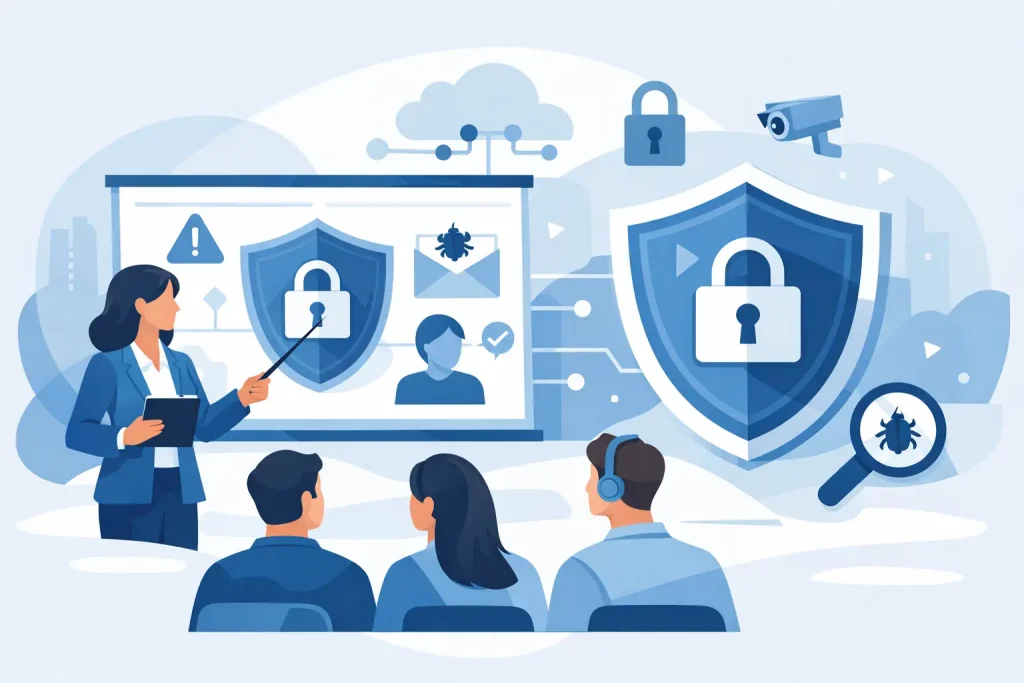
A single clicked email can create days of disruption for a small business, nonprofit, clinic, or community organization. That is why security awareness training for employees is no longer a nice extra for large enterprises. It is a practical business safeguard for organizations that rely on email, cloud systems, shared files, online payments, and public trust to keep operations moving.
For many local organizations, the biggest cybersecurity gap is not a firewall or a software license. It is the everyday moment when a staff member is busy, distracted, and asked to make a quick decision. A fake invoice looks real. A password reset message feels urgent. A text from an executive seems routine. Attackers count on normal work habits, which means your team needs more than a one-time slideshow to stay prepared.
What security awareness training for employees should actually do
Good training is not about making people fearful or turning every employee into a technical expert. It should help staff recognize suspicious activity, slow down when something feels off, and know exactly what to do next. That sounds simple, but it has to be built into real workflows.
A front desk employee needs to spot unusual requests for customer information. A bookkeeper needs to verify payment changes before money moves. A marketing coordinator needs to understand the risks of reused passwords, social media account takeovers, and fake file-sharing invites. A manager needs to know how to report a problem quickly without worrying about blame.
When training works, employees stop thinking of cybersecurity as an IT issue that happens somewhere else. It becomes part of how the organization protects its finances, reputation, client relationships, and day-to-day continuity.
Why one-time training usually falls short
Many organizations handle cybersecurity training as a compliance item. New hires watch a video, click through a few slides, sign a form, and everyone moves on. The problem is that attackers do not work from annual calendars.
Threats change quickly. Phishing emails are more convincing than they were a few years ago. Text-based scams are rising. AI-generated messages can sound polished and personal. Staff turnover also changes your risk profile. New employees may not know internal processes, and long-time employees may grow overconfident.
That does not mean training needs to become complicated or time-consuming. It means it should be continuous, relevant, and easy to absorb. Short refreshers throughout the year are usually more effective than a single dense session that people forget by next week.
The most effective topics to cover
The strongest security awareness training for employees focuses on the threats people are most likely to face in normal business operations. Phishing is still at the center because email remains the easiest way to get someone to click, download, reply, or share credentials. But phishing is only part of the picture.
Employees should also understand password hygiene, multi-factor authentication, safe browsing, suspicious attachments, business email compromise, mobile device risks, and basic data handling. For healthcare organizations or groups that manage sensitive donor, customer, or member information, privacy practices need special attention as well.
Physical security belongs in the conversation too. A printed client list left in a common area, a stolen laptop, or an unauthorized person entering an office can create the same kind of damage as a malicious email. The best training connects digital security and workplace behavior instead of treating them as separate issues.
Security awareness training for employees works best when it feels local and relevant
Generic examples are easy to ignore. People engage more when the training reflects how their organization actually operates. A museum will face different risks than a construction firm. A nonprofit with volunteers has different needs than a medical office with strict data handling requirements. A local chamber or tourism organization may depend heavily on shared accounts, public Wi-Fi, event registrations, and social media.
That is where many small and mid-sized organizations get better results from a partner who understands both technical risk and business operations. Training should reflect the systems your staff uses, the kinds of requests they receive, and the pressure points that come with serving the public. It should support the way your team works, not interrupt it with vague warnings.
For community-based organizations, this matters even more. Trust is local. If a payroll scam, donor-data issue, hacked website, or email compromise disrupts operations, the damage is not abstract. It affects staff, customers, members, and community relationships that took years to build.
What a strong training program looks like in practice
The most effective programs combine education, repetition, and measurement. Employees need clear instruction, but they also need practice. Simulated phishing tests can be useful because they show how staff respond under normal working conditions. Short follow-up lessons help reinforce the patterns people missed.
The tone matters here. Training should not embarrass employees or create a gotcha culture. If people are afraid of being singled out, they may hide mistakes instead of reporting them early. Early reporting is exactly what reduces damage.
A strong program usually includes role-based training, regular reminders, policy guidance that people can actually understand, and a simple reporting path for suspicious messages or activity. It also helps when leadership participates visibly. If owners, directors, and managers treat cybersecurity as part of business discipline, employees are more likely to do the same.
Common mistakes businesses make
One common mistake is assuming that antivirus software or email filtering makes employee training less necessary. Those tools matter, but they do not catch everything. Another mistake is treating all employees the same. Someone handling payments or sensitive records carries a different level of risk than someone with limited system access.
Some organizations also overload people with technical jargon. That approach usually backfires. Staff need practical examples, plain language, and realistic scenarios. They do not need a lecture on every category of malware.
Another issue is failing to connect training to policy. If employees are told to verify unusual requests, but there is no documented approval process for vendor payment changes or password resets, the training has nowhere to land. Awareness only works when procedures support it.
How to measure whether training is helping
Completion rates are not enough. A business can have 100 percent participation and still remain highly vulnerable. Better indicators include fewer risky clicks, faster reporting of suspicious messages, improved use of multi-factor authentication, and fewer repeated mistakes over time.
It is also worth watching operational signals. Are employees asking smarter questions before approving requests? Are finance and admin teams verifying changes more consistently? Are managers escalating unusual issues sooner? Those behavior changes often tell you more than a test score.
If your organization has already experienced account lockouts, spoofed emails, suspicious payment requests, or website issues, those incidents can help shape better training. The goal is not to react only after a problem. The goal is to use real patterns to reduce the chance of the next one.
Why this matters beyond cybersecurity
Security training protects more than devices and inboxes. It protects business continuity. It protects customer confidence. It protects the credibility of the messages your organization sends into the community.
That broader view matters for organizations that depend on both operational stability and public engagement. A compromised email account can affect billing, scheduling, donor communication, marketing campaigns, and website trust all at once. That is why cybersecurity should be tied to your larger digital strategy, not isolated from it.
For organizations looking to enhance your business through more coordinated systems, security awareness is part of the foundation. If your website, email, cloud tools, internal files, and communications channels all support growth, they also need users who understand how to protect them. At Epuerto, that integrated perspective is central to building comprehensive digital solutions that produce real, measurable outcomes.
Getting started without overcomplicating it
If your organization has no formal program in place, start with the basics and build from there. Focus first on phishing awareness, password practices, multi-factor authentication, safe handling of sensitive data, and a clear process for reporting anything suspicious. Then make training ongoing rather than occasional.
Keep it practical. Use examples that reflect your daily work. Review policies that affect money movement, account access, and data sharing. Make sure new employees are included early, and revisit training whenever systems, staffing, or risks change.
Most of all, treat awareness as part of how your organization operates, not as a once-a-year requirement. The businesses and institutions that handle cybersecurity best are usually not the ones with the flashiest tools. They are the ones where people know what to watch for, what to do next, and why those small decisions matter every single day.
A well-trained team will never eliminate every risk, but it can make your organization much harder to fool, much faster to respond, and far better positioned to protect the trust your community places in you.