
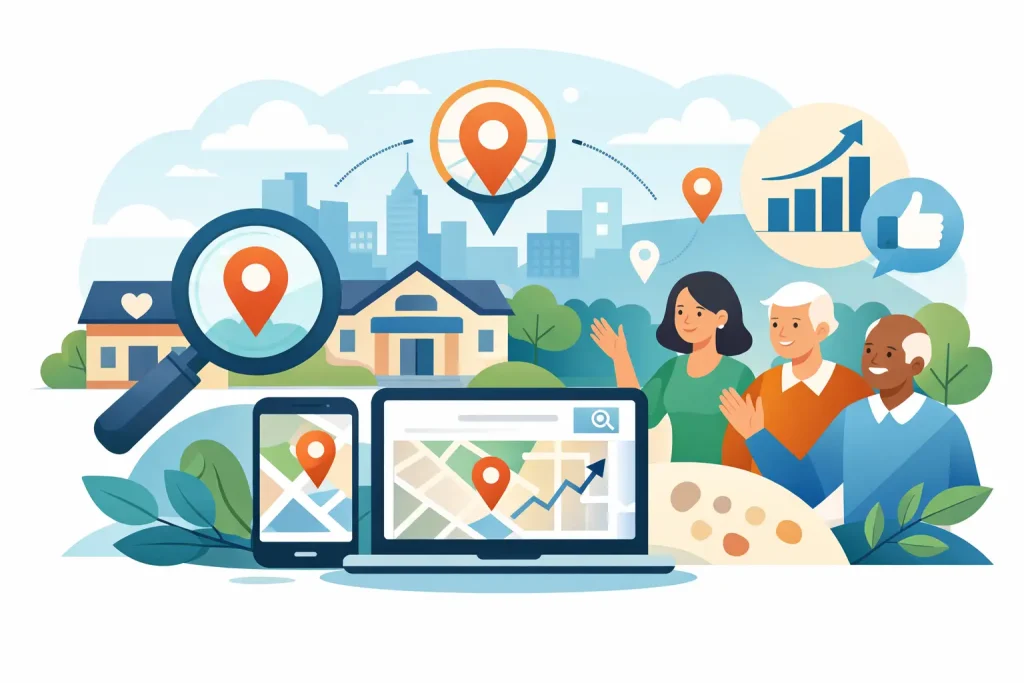
A food pantry can be doing life-changing work, a museum can be planning a great exhibit, and a chamber can be hosting valuable events – yet still be nearly invisible when someone nearby searches online. That gap is exactly why local seo for community organizations matters. If people in your area cannot quickly find your hours, location, programs, or contact information, visibility turns into missed attendance, fewer donations, and weaker community connection.
For community organizations, local SEO is not about chasing vanity traffic. It is about being present at the moment someone searches for “museum near me,” “youth programs in Lincoln County,” “local business networking group,” or “food assistance open today.” Search visibility becomes part of public service. When done well, it supports outreach, trust, and real, measurable outcomes.
Why local SEO works differently for community organizations
A local business usually wants a sale. A community organization may want a visit, a volunteer signup, an event registration, a donation, or simply awareness. That changes the strategy.
Your audience is often broader and more varied. One person may be a parent looking for programs. Another may be a tourist searching for local attractions. Another may be a donor, board member, or local partner. That means your digital presence needs to answer different questions clearly and quickly.
There is also a trust factor. Community organizations are judged not just by what they offer, but by how credible and current they appear. If your website is outdated, your hours are inconsistent, or your location details differ across platforms, people hesitate. Search engines do the same. Local SEO is partly a visibility strategy and partly a consistency strategy.
The foundation of local SEO for community organizations
The strongest local search performance usually comes from basics done well. Many organizations assume they need constant content production or complicated technical work first. In reality, the first gains often come from fixing core signals.
Start with your Google Business Profile
If your organization serves a local area, your Google Business Profile is one of the most important digital assets you have. It influences whether you appear in map results, branded searches, and location-based discovery.
Your profile should include your exact organization name, primary category, address, phone number, website, service areas if appropriate, hours, photos, and a clear description of what you do. For a museum, that might mean exhibits, educational programs, and visitor information. For a nonprofit, it may mean services offered, who you serve, and how people can get involved.
Accuracy matters more than marketing language here. If your office is open by appointment only, say so. If seasonal hours change, update them. If you host recurring events, use profile updates to support them. Search engines reward relevance, but people reward reliability.
Keep your contact information consistent everywhere
One of the most common local SEO problems is conflicting information across directories, social pages, websites, and old listings. A different suite number, an outdated phone number, or a former website URL can weaken trust.
Your name, address, phone number, and website should match across every major mention of your organization. This matters for search visibility, but it also matters for the user who is deciding whether to visit, donate, or call. Community organizations often evolve over time, which makes this issue easy to overlook. A periodic audit is worth it.
Make your website location-specific
A good website should do more than look professional. It should help search engines and local visitors understand where you are, who you serve, and what actions they can take.
Your homepage and contact page should clearly reference your city, county, or region in natural language. If you serve multiple communities, create dedicated pages where that makes sense. A regional arts center might have separate pages for classes, performances, and outreach by location. A chamber may need pages for local events, membership, and visitor resources.
This is where many organizations undersell themselves. They write broadly about their mission but never clearly state the communities they impact. Local relevance needs to be explicit.
Content that helps people find you nearby
Local SEO is not just listing management. Search engines also look for useful, locally relevant content.
Build pages around real community intent
Think about what people actually search before they know your name. They may look for “local volunteer opportunities,” “family activities this weekend,” “community health resources,” or “business networking in Newport.” These are intent-rich searches. They reflect immediate needs.
Your website should have pages that align with those needs. Event pages, program pages, service descriptions, visitor guides, donation pages, and FAQ content all help when written clearly. The goal is not to stuff keywords into every paragraph. The goal is to create pages that match real questions from real local audiences.
Use event content strategically
Community organizations often have an advantage that businesses do not – a steady flow of local activity. Exhibits, classes, fundraisers, workshops, seasonal programs, and public meetings create fresh content opportunities.
Each event should have its own well-structured page with the event name, date, location, audience, and purpose. If the event repeats annually, keep building on that authority over time rather than creating thin, forgettable pages. This can help your organization show up for both branded and non-branded local searches.
There is a trade-off here. If your team is stretched thin, it is better to maintain a smaller number of complete, accurate event pages than to publish many incomplete ones.
Reviews, reputation, and community trust
Reviews can feel awkward for nonprofits and community groups. Some leaders worry they seem too commercial. In practice, reviews often serve as public trust signals.
A museum can invite visitors to share feedback. A chamber can ask members to review their experience. A community health or support organization may need to be more careful due to privacy concerns, which is a valid exception. The right approach depends on your mission and audience.
What matters is reputation management. If reviews are appropriate for your organization, ask for them consistently and respond professionally. If reviews are not the right fit, make sure testimonials, partner endorsements, and news mentions are visible on your website. Search visibility and public confidence often rise together.
Technical issues that quietly hurt local visibility
Many organizations invest in messaging while their technical foundation lags behind. That creates friction.
A slow site, broken mobile experience, missing SSL certificate, confusing navigation, or inaccessible design can hurt local SEO and user trust at the same time. Most local searches now happen on phones, often when someone is trying to make a quick decision. If your site loads slowly or hides critical details, that visit may be lost.
Security matters too. Community organizations handle inquiries, donations, registrations, and internal communications. If your digital infrastructure is unreliable, search marketing becomes harder to sustain. Strong visibility works best when paired with dependable hosting, maintenance, and site performance.
Local partnerships can strengthen local SEO
Community organizations already operate within networks – city partners, schools, sponsors, media outlets, tourism groups, business associations, and service providers. Those relationships can support local SEO when reflected online.
When partner organizations mention your events, programs, or resources on their websites, that can reinforce local relevance. When your own site highlights collaborations clearly, it creates context for search engines and users alike. The point is not to chase random backlinks. The point is to strengthen the digital footprint of your real community role.
For organizations in regional markets, this ecosystem effect can be especially powerful. A coordinated digital presence across websites, listings, events, social channels, and local promotions often outperforms isolated tactics. That is one reason integrated support matters. Organizations that align their web infrastructure, local content, and outreach channels tend to enhance their business and mission visibility more effectively than those managing each piece separately.
How to measure success without getting distracted
Local SEO should lead to outcomes that matter to your organization. Rankings alone are not enough.
Look at direction requests, phone calls, contact form submissions, event registrations, volunteer applications, ticket sales, donations, and website visits from your service area. Also watch which pages bring in local traffic and which searches trigger your visibility. That gives you a practical view of what is working.
It also helps you make better decisions. If program pages perform better than general mission pages, expand them. If people find you through event searches but abandon the site before registering, improve the user path. Local SEO is not a one-time setup. It is an operational asset that gets stronger when measured and maintained.
Where many organizations get stuck
The usual problem is not lack of effort. It is fragmentation. One vendor handles the website, someone on staff updates social media, another person manages listings occasionally, and IT support is separate from marketing entirely. That setup creates delays, inconsistencies, and missed opportunities.
Community organizations need digital systems that work together. Your website, local search presence, security, content updates, and public-facing promotions all influence one another. A complete approach is usually more efficient than patching issues one at a time.
If your organization serves a local audience, local SEO is not a side project. It is part of how people discover your value, verify your credibility, and decide to engage. When your digital presence reflects the quality of your work on the ground, your organization becomes easier to find and easier to trust. That is where stronger community impact starts.