
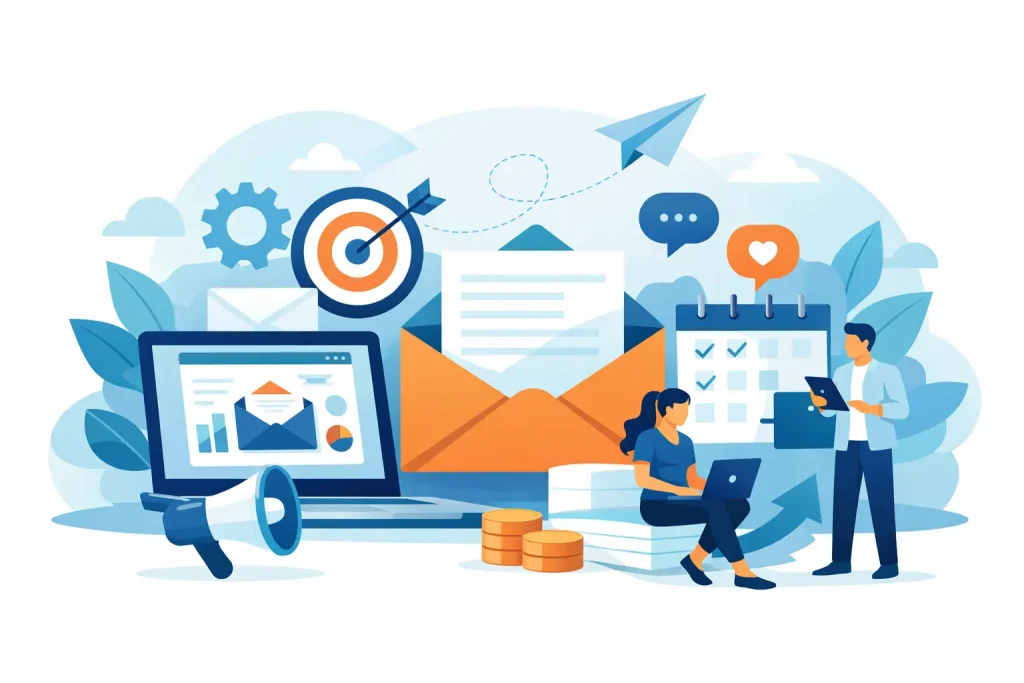
A small business does not need a massive list to see real results from email. It needs consistency, clear messaging, and the right system behind it. That is why email marketing services for small business remain one of the most practical investments for organizations that want stronger customer relationships, repeat business, and better visibility without wasting time on scattered marketing efforts.
For many local businesses and community organizations, email sits in an awkward spot. Everyone knows it matters, but it often gets pushed aside while staff handle daily operations, customer service, billing, events, and website updates. The result is familiar – outdated lists, irregular newsletters, weak open rates, and no clear connection between outreach and revenue. The problem is usually not email itself. It is the lack of a structured service that connects strategy, design, technology, and ongoing management.
What email marketing services for small business should actually do
A useful email service is not just a platform login and a monthly template. Small businesses need a system that supports the full process from list organization to campaign reporting. That includes audience segmentation, mobile-friendly design, message planning, automation, testing, deliverability monitoring, and compliance with privacy expectations.
The difference matters. If a company only sends one generic email to every contact, it may stay visible, but it rarely becomes relevant. A healthcare office, local museum, chamber, retailer, or contractor all have different audiences with different reasons to engage. Existing customers may need appointment reminders or seasonal updates. Prospects may need trust-building content. Community members may respond better to event invitations, local spotlights, or service announcements. Good email marketing services help shape those distinctions instead of flattening them.
There is also a technical side that many businesses underestimate. Sender reputation, domain setup, authentication, hosted email alignment, and list hygiene all affect whether messages reach inboxes or disappear into spam folders. When email is treated as an isolated marketing task, those details are often missed. When it is managed as part of a broader digital system, results tend to improve because the foundation is stronger.
Why small businesses still get strong returns from email
Social media algorithms change. Search visibility takes time. Paid advertising can become expensive fast. Email offers something more stable – direct access to people who already know your organization or have chosen to hear from you.
That direct access is valuable for small businesses because it supports both short-term and long-term goals. A retail business can promote a seasonal sale. A nonprofit can drive attendance for an event. A service provider can stay top of mind between customer needs. A local institution can reinforce trust with consistent communication. In every case, email creates a repeatable channel that the business controls.
It also performs well across the customer lifecycle. A first-time visitor can receive a welcome sequence. A current customer can get reminders, updates, or special offers. An inactive contact can be re-engaged with a targeted campaign. This is where email becomes more than promotion. It becomes part of customer experience.
That said, returns depend on execution. Sending too often can create fatigue. Sending too rarely can make the list go cold. Overdesigned emails may look polished but reduce clarity. Plain emails may feel personal but underrepresent the brand if they are inconsistent. The right balance depends on the business, the audience, and the reason people joined the list in the first place.
Choosing the right service model
Not every small business needs the same level of support. Some need complete campaign management. Others need a partner to build the system and then provide oversight. The right fit depends on staff capacity, technical complexity, and how central email is to growth.
A business with an active website, online forms, local promotions, and multiple customer touchpoints usually benefits from a more integrated model. In that setup, email is connected to website activity, customer inquiries, event registrations, and brand campaigns. Messaging stays aligned, reporting becomes more useful, and less time is lost moving information between disconnected tools.
A smaller organization with limited staff may need something simpler but still dependable. In that case, the service should focus on consistency first – regular newsletters, a clean list, branded templates, and a manageable schedule. Sophisticated automation can come later. Too many small businesses are sold advanced features before the basics are working.
What to look for in email marketing services for small business
The best provider should understand both communication strategy and the technology behind it. This is especially important for organizations that already struggle with fragmented systems. If your website, hosting, domain setup, cybersecurity, customer database, and marketing efforts all live in separate hands, email can easily become another disconnected tool.
Look for a service that can align email with your broader digital presence. That means campaigns match your website branding, forms connect properly, data is handled securely, and performance reporting is easy to understand. If you serve a local market, the provider should also understand community-based messaging. A local audience usually responds better to useful, timely communication than to generic national-style promotions.
Strong email service also includes planning. Businesses often ask, “How many emails should we send?” The better question is, “What should customers hear from us, and when?” A useful plan might include newsletters, seasonal promotions, appointment reminders, event outreach, customer education, and follow-up sequences. The exact mix depends on the business model.
Reporting is another major factor. Open rates still offer some insight, but they are not enough on their own. Small businesses need to know whether email is driving inquiries, calls, bookings, donations, sales, or return visits. If reporting stops at opens and clicks, it is hard to make smart decisions.
Common mistakes that hold email back
One of the biggest mistakes is treating the contact list as a single audience. A donor, a patient, a longtime customer, and a new subscriber should not always receive the same message. Segmentation does not need to be complicated, but it does need to exist.
Another problem is inconsistency. Many organizations send nothing for months and then push out three promotions in two weeks. That pattern often lowers engagement because subscribers do not build a clear expectation. Regular communication tends to outperform bursts of reactive emailing.
There is also the issue of message overload. Small businesses sometimes try to fit every service, event, and update into one email. That usually weakens response. One clear purpose per campaign is often more effective, especially on mobile devices where attention is short.
Design can also become a problem when businesses focus more on appearance than usability. A good email should look professional, but it should also load quickly, read clearly on a phone, and make the next step obvious. Flashy design is not a substitute for clarity.
The value of integration across marketing and IT
For many organizations, email works best when it is part of a coordinated digital system rather than a stand-alone tactic. This is where a full-service partner can create an advantage. If the same team understands your website, hosting environment, security needs, brand standards, and communication goals, email becomes easier to manage and easier to trust.
That matters for more than convenience. It affects performance. Website forms can capture leads correctly. Domain authentication can be configured properly. Customer data can be handled more responsibly. Campaigns can support other channels instead of competing with them. A promotion on social media, a website update, a local event, and an email campaign all become part of the same message.
For community-based organizations and regional businesses, this integrated approach can be especially effective. Local growth often depends on repeated visibility across trusted channels. Email supports that effort by giving businesses a direct line to people who already know the name and are more likely to respond.
When it makes sense to invest
If your business has an outdated mailing list, no campaign schedule, weak customer follow-up, or no clear way to measure outreach, the time to invest is probably now. The same is true if your staff is spending too much time assembling emails manually or if your messages are not aligned with your website and brand.
Not every organization needs a large campaign calendar right away. But nearly every business benefits from a cleaner list, stronger branding, better timing, and a more reliable process. Those improvements are practical, measurable, and often achievable faster than businesses expect.
At Epuerto, we see the strongest results when email is treated as part of a larger business system – one that supports operations, visibility, trust, and customer engagement together. That is usually where small businesses gain momentum, because the work stops feeling fragmented and starts producing real, measurable outcomes.
A good email strategy does not need to be flashy. It needs to be relevant, reliable, and connected to the way your business actually grows.