
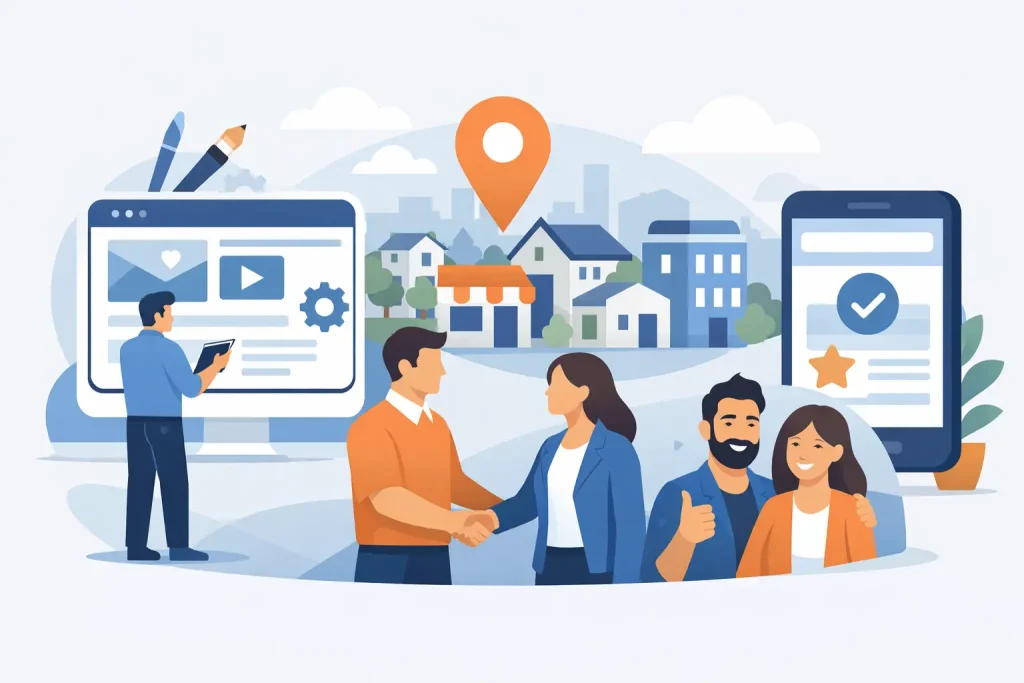
A prospective customer may decide whether to call your business before they read a full sentence. They see an outdated layout, a broken mobile menu, slow-loading photos, or a contact form that feels unreliable, and they move on. For local organizations, web design services are not simply about making a site look current. They shape trust, accessibility, visibility, and the next step a visitor is willing to take.
A website has to serve people with different needs at once. A business owner may need leads. A nonprofit may need donations and volunteers. A healthcare office may need patients to find the right information quickly and confidently. A museum, chamber, or community organization may need to promote events, memberships, and local partnerships. The strongest website is built around those real actions, supported by dependable technology behind the scenes.
What Effective Web Design Services Should Deliver
A modern website should make it easier to do business with your organization. That starts with a clear structure. Visitors should understand who you serve, what you offer, where you are located, and how to reach you without working through a maze of pages.
Design matters because it gives that information credibility. Consistent colors, professional photography, readable type, and thoughtful spacing tell visitors that your organization is established and attentive. But appearance alone is not enough. A polished site that loads slowly, hides important information, or fails on mobile devices will still cost opportunities.
Effective web design services bring strategy, content, design, and technical execution together. They should produce a website that is easy to navigate, easy to manage, and prepared to support future marketing efforts. That includes search visibility, social media campaigns, email communications, digital advertising, and community promotions.
For many regional organizations, the goal is not to attract everyone everywhere. It is to reach the right people in the communities they serve. A website should support that local connection with clear service areas, accurate business information, locally relevant content, and calls to action that match how customers actually make decisions.
Start With the Visitor’s Job
Before choosing colors or reviewing homepage mockups, define what visitors need to accomplish. This is where many website projects lose focus. Internal teams often want every service, program, history point, and announcement featured at the same level. Visitors do not experience the organization that way. They arrive with a specific question.
A homeowner may want emergency computer repair. A parent may be looking for a clinic’s office hours. A prospective member may need event details. A local business may be comparing managed IT providers. Each visitor needs a direct path to the answer and a reason to take the next step.
That usually means prioritizing a few high-value actions, such as requesting a quote, calling an office, scheduling an appointment, registering for an event, making a donation, or subscribing to updates. These actions should be visible throughout the site, not buried at the bottom of a long page.
The right approach depends on the organization. A service company may benefit from focused service pages and request forms. A nonprofit may need a stronger storytelling structure that connects its mission to volunteer and donor opportunities. A healthcare organization must give additional attention to privacy, accessibility, and accurate patient information. Good design does not force every organization into the same template.
Make Mobile the Starting Point
Local visitors frequently search from a phone, often when they are ready to act. They may be standing outside your location, looking for directions, calling after hours, or comparing options between appointments. If buttons are difficult to tap, text is too small, or the page takes too long to load, the site is working against your business.
Mobile-first design means more than shrinking a desktop page. It means simplifying navigation, placing essential information early, using readable content blocks, and ensuring forms work comfortably on smaller screens. It also means testing real visitor tasks on real devices. Can someone find your phone number, service area, hours, or appointment link in seconds?
Build Trust Through Content and Design
A website should sound like the people behind it. Generic claims such as “quality service” or “we care” do little unless visitors can see what makes that promise believable. Specific language creates confidence: explain your process, identify the communities you serve, show the expertise of your team, and describe what customers can expect after they contact you.
Trust also comes from consistency. Your website, email communications, social profiles, printed materials, and local advertising should carry a recognizable visual identity and message. When each channel tells a different story, potential customers may question whether the organization is organized and reliable. When they work together, every interaction reinforces the next one.
Testimonials, case examples, staff photos, credentials, community involvement, and clear contact information can all help. They should be used with purpose, not piled onto the page. A busy homepage filled with badges, sliders, popups, and competing messages can create the same confusion as an outdated site.
Photography deserves special attention. Stock images can be useful in limited situations, but authentic photos of your staff, facility, products, events, and local community often create a stronger connection. They show visitors that there are real people behind the organization and give your brand a sense of place.
The Technical Foundation Cannot Be an Afterthought
A visually strong website still needs dependable infrastructure. Security updates, backups, secure hosting, spam protection, performance monitoring, and access controls all affect how well a site supports your organization. A hacked site, failed form, or lost content update can damage credibility quickly.
This is especially relevant for organizations managing sensitive information or relying on their website for daily operations. Healthcare entities, professional services, schools, and nonprofits may have different compliance and security considerations, but every organization benefits from clear ownership of its digital assets. Domain registrations, hosting accounts, website logins, email services, and backup processes should be documented and managed responsibly.
There is a trade-off between adding features and protecting performance. Video backgrounds, animation, large image galleries, third-party widgets, and popups can add interest, but they can also slow pages down and create maintenance issues. The right question is not whether a feature looks impressive. It is whether it helps visitors complete a meaningful action.
A full-service partner can be valuable here because the website does not operate in isolation. Its security, hosting, email, analytics, advertising, and ongoing support all influence the customer experience. Coordinating those services under one accountable team reduces gaps that often appear when multiple vendors each manage only one piece of the picture.
Plan for Visibility After Launch
A website launch is a starting point, not the finish line. Search engines need clear page structure, relevant content, accurate location details, and a technically healthy site to understand what your organization offers. Visitors need current information when they arrive. A site that is never updated can gradually become less useful, even if its design still looks good.
Create a realistic plan for ongoing content. This may include adding service pages, posting event updates, refreshing staff bios, sharing project highlights, or publishing helpful answers to common questions. The schedule does not need to be overwhelming. Consistent, useful updates are more valuable than a burst of content followed by silence.
Measure results based on business goals. Website traffic is helpful, but it is not the only signal that matters. Track calls, form submissions, appointment requests, registrations, newsletter signups, donations, and other actions that move your organization forward. If a page receives traffic but produces no engagement, review its message, call to action, speed, and audience fit.
For local organizations, visibility can also extend beyond search. A website can support digital displays, community newsletters, social campaigns, printed promotions, and local business networks. When those channels direct people to a clear, relevant landing page, marketing becomes easier to measure and more likely to produce real, measurable outcomes.
Choose a Partner Who Understands the Whole Picture
The best web design relationship begins with questions, not a preselected template. Your provider should want to understand your audience, services, technology environment, growth priorities, internal capacity, and local market. They should also explain recommendations in practical business terms rather than hiding essential decisions behind technical jargon.
Ask how the site will be maintained after launch, who owns the accounts and content, how backups and security updates are handled, and how success will be measured. Ask whether the team can support the broader work that follows, from search optimization and branding to managed IT and cybersecurity. Vendor consolidation is not always necessary, but it can save time and reduce risk when one partner can coordinate your digital foundation and public-facing communications.
Epuerto helps organizations enhance their business through comprehensive digital solutions that connect reliable technology with stronger community visibility. The goal is not simply a new website. It is a dependable platform that helps people find you, trust you, and take action.
Your website is often the first place a community member encounters your organization. Give that moment the clarity, confidence, and local relevance it deserves.