
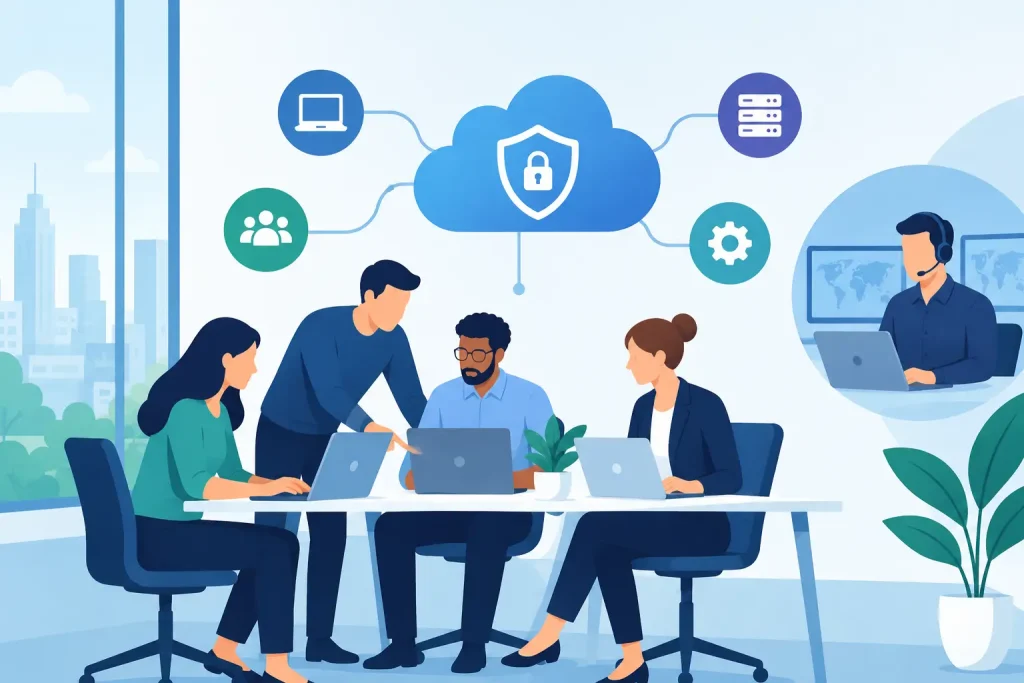
A phishing email reaches an employee at 8:12 a.m. A shared file stops syncing before a board meeting. A customer finds an outdated phone number on a website. For many small organizations, these appear to be separate problems handled by separate vendors. The future of managed IT services is changing that equation. Technology support is becoming less reactive, more connected, and more closely tied to how an organization serves customers, protects its reputation, and grows in its community.
For businesses, nonprofits, healthcare offices, museums, and local institutions, this shift is practical. The goal is not to chase every new tool. It is to build a dependable technology foundation that reduces disruption, protects sensitive information, supports employees, and gives leadership clearer control over its digital presence.
The Future of Managed IT Services Is Proactive
Traditional IT support often begins after something breaks. A computer fails, the internet drops, an employee cannot access email, or ransomware creates an emergency. Responsive support still matters, especially when work has stopped. But waiting for problems to become visible is expensive and disruptive.
Modern managed IT services are built around prevention. Through continuous monitoring, patch management, backup checks, device oversight, and security alerts, providers can identify many issues before they affect daily operations. A storage drive showing early signs of failure can be replaced before data is lost. A missing security update can be applied before it becomes an opening for an attacker. An unusual login can be investigated before it turns into a larger incident.
This approach also gives decision-makers a more realistic view of their technology. Instead of receiving a list of urgent repair bills, they can plan for equipment refreshes, software changes, security improvements, and future capacity. That makes IT spending more predictable and less driven by crisis.
Cybersecurity Will Be Part of Everyday Support
Cybersecurity is no longer a specialized concern reserved for large companies. Local businesses and community organizations are frequent targets because attackers know that smaller teams may have limited internal resources, older systems, and busy staff members who have not received regular training.
The future of managed IT services places security inside routine support rather than treating it as an add-on. That includes multi-factor authentication, managed antivirus and endpoint protection, secure email configurations, regular patching, backup testing, access controls, and employee awareness training. Each layer addresses a different risk. No single product can protect an organization on its own.
Human behavior will remain a major factor. A well-designed phishing email can look like a request from a director, vendor, bank, or shipping company. Employees should not be blamed for every mistake, but they do need clear processes and regular education. The strongest IT partners make security understandable: pause before clicking, verify unexpected requests, use unique passwords, and report suspicious activity quickly.
There is a trade-off. More security controls can add steps to a workday. Multi-factor authentication, permission restrictions, and stronger password standards may feel inconvenient at first. The right managed IT strategy balances protection with usability so staff can work efficiently without exposing the organization to avoidable risk.
Cloud Services Need Better Governance, Not Just More Storage
Cloud computing has made it easier for teams to work from different locations, share files, collaborate on documents, and access key applications without maintaining every system on-site. For coastal businesses, remote employees, traveling staff, and organizations with multiple locations, that flexibility can be especially valuable.
But moving files and applications to the cloud does not automatically create a well-managed environment. Many organizations accumulate duplicate accounts, unapproved software subscriptions, unclear file permissions, and disconnected communication tools. Information becomes hard to find, and sensitive documents may be available to people who no longer need access.
The next stage of managed IT is cloud governance. That means organizing systems around the way people actually work. It includes deciding where files belong, setting access by role, managing employee onboarding and offboarding, protecting hosted email, and choosing platforms that can grow with the organization.
For some teams, a fully cloud-based setup makes sense. For others, a hybrid approach that combines cloud services with local equipment may be more reliable or cost-effective. Healthcare offices, organizations with large media files, and businesses with inconsistent connectivity may have different requirements. Good advice begins with operational needs, not a one-size-fits-all software recommendation.
Business Continuity Will Move Beyond Basic Backups
Many organizations believe they are protected because they have a backup. The more useful question is whether that backup can be restored quickly, completely, and under pressure. A backup that has not been tested may provide false confidence.
Managed IT services are increasingly focused on business continuity and disaster recovery. This means identifying the systems that keep the organization functioning, setting recovery priorities, maintaining protected copies of critical data, and establishing a clear response plan for outages, cyber incidents, equipment failures, and local emergencies.
A local retailer may need point-of-sale access restored quickly. A nonprofit may need donor records and communication tools available before a fundraising campaign. A healthcare office may need secure access to patient-related systems while maintaining privacy requirements. Recovery goals should reflect the real cost of downtime for that specific organization.
Planning also needs to include communication. If email is unavailable, who contacts employees, customers, vendors, or board members? If a website is down, where can the organization post an update? The organizations that recover best are not necessarily those with the largest technology budgets. They are the ones that have made decisions before a disruption happens.
IT and Digital Presence Will Become More Connected
For many local organizations, the public-facing side of technology is still managed separately from the operational side. One company handles computers, another hosts email, another built the website, and another runs social media or advertising. This fragmentation can create delays, gaps in accountability, and a confusing customer experience.
The future points toward more coordinated support. A website, hosted email, customer inquiry forms, online scheduling platform, digital displays, and social channels all rely on technology that must be secure, current, and aligned with the organization’s goals. An outdated website is not just a marketing issue if it contains vulnerable software. A missed email inquiry is not just an IT problem if it costs a potential customer or donor.
This is where an integrated partner can make a meaningful difference. Epuerto helps organizations connect dependable IT infrastructure with web, marketing, and local visibility efforts, reducing the burden of coordinating multiple vendors. The value is not simply consolidation. It is having technical and promotional work move in the same direction.
AI Will Assist IT Teams, but Judgment Still Matters
Artificial intelligence will play a growing role in managed services. It can help analyze alerts, spot unusual patterns, summarize support requests, identify repetitive issues, and speed up routine troubleshooting. For smaller organizations, this may improve response times and make advanced monitoring more accessible.
However, AI does not replace experienced judgment. Automated tools can produce inaccurate answers, overlook local context, or recommend changes that do not fit an organization’s systems or policies. Sensitive decisions involving security incidents, access permissions, compliance, vendor contracts, and business priorities still require accountable people.
Organizations should also be careful about what employees enter into public AI tools. Customer data, internal documents, financial information, and confidential communications should not be copied into tools without clear approval and safeguards. Managed IT providers will increasingly help clients establish practical AI policies: which tools are approved, what information can be used, and when staff should escalate questions.
What Local Organizations Should Do Now
Preparing for the future does not require replacing every system at once. Start by understanding what you have. A current inventory of devices, software, accounts, network equipment, and data systems creates a baseline for better decisions.
Then focus on the highest-impact gaps. For many organizations, that means strengthening email security, enabling multi-factor authentication, confirming backups, updating aging devices, documenting key processes, and reviewing who has access to critical systems. These improvements may not be glamorous, but they protect daily operations.
Finally, choose technology partners that ask about your goals, not only your hardware. If your organization wants to serve more customers, improve community engagement, support remote staff, open another location, or protect sensitive information, your IT plan should support that direction. Technology is most valuable when it helps people do better work and makes growth easier to manage.
The best next step is often a straightforward conversation about what could interrupt your organization tomorrow and what opportunities you would pursue if your technology were easier to trust. That conversation can turn scattered tools into a foundation for real, measurable outcomes.