
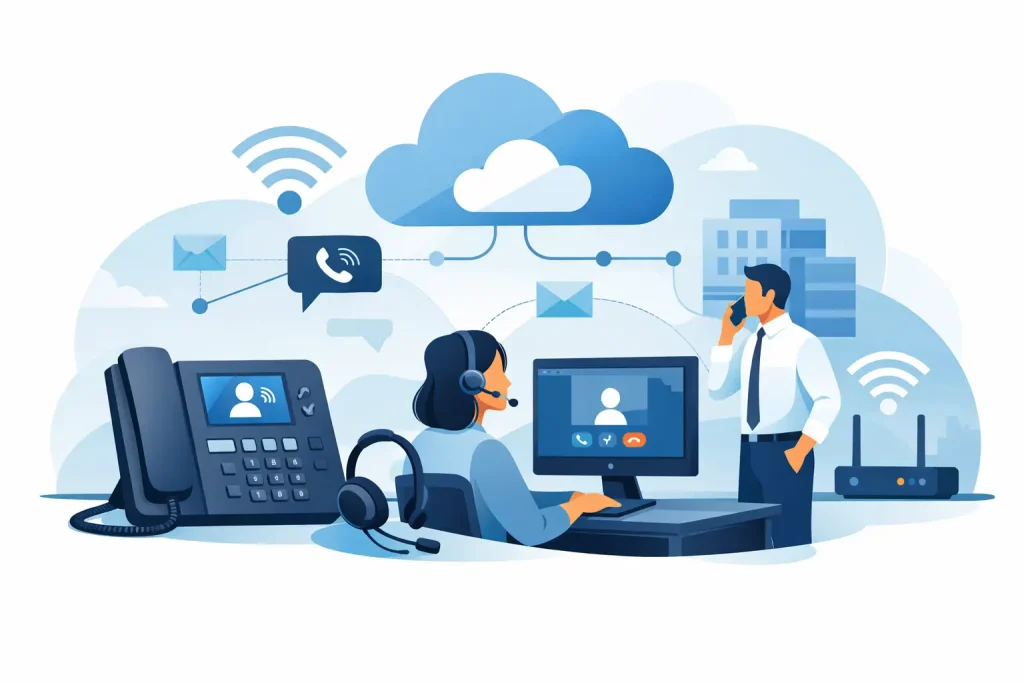
Missed calls cost more than a single sale. For a small business, they can mean a missed appointment, a lost donor, a frustrated patient, or a customer who never comes back. That is why voip telephone systems for small business have become a practical upgrade, not just a tech trend. When your phones are easier to manage, easier to scale, and better connected to how your team actually works, you create a stronger operation and a better customer experience.
Traditional phone systems were built for a different business environment. They assumed your staff worked from one location, used desk phones all day, and rarely needed to connect calling data with customer records, email, or web-based tools. Most small organizations do not work that way anymore. They need phones that support front-desk staff, remote employees, field teams, and leaders who are moving between office, home, and community events.
Why voip telephone systems for small business make sense
VoIP stands for Voice over Internet Protocol. In plain terms, it means your phone service runs through your internet connection instead of relying on older copper phone lines. That shift changes more than the wiring. It changes how flexible, manageable, and cost-effective your communications can be.
For many small businesses, the first appeal is cost control. Long-distance charges are often reduced or eliminated, hardware costs can be lower, and adding a new user does not usually require the kind of onsite rewiring older systems demanded. If you are running a growing office, a nonprofit with a lean budget, or a healthcare practice balancing service and overhead, that matters.
The second benefit is capability. Features that once felt enterprise-only are now common. Auto attendants, call routing, voicemail-to-email, mobile apps, call recording, business texting, and multi-location support are all within reach for smaller organizations. Those tools can make your business feel more responsive and more organized, even if your team is still relatively small.
There is also a broader operational advantage. Your phone system no longer sits apart from the rest of your technology. It can become part of a more comprehensive digital solution, connected to your network, your customer workflows, and your day-to-day service model.
What small businesses actually gain
The real value of a VoIP system is not the acronym. It is what happens when communication friction goes down.
A front desk can route calls by department without putting people on endless hold. A manager can answer the main business line from a mobile device during travel or after hours. A remote employee can appear as part of the same office phone system as the rest of the staff. Voicemails can arrive in an email inbox, which means fewer forgotten messages and faster follow-up.
For customer-facing organizations, that consistency matters. A museum handling event inquiries, a chamber coordinating member calls, a clinic booking appointments, or a local retailer managing service requests all benefit when communication feels reliable and professional.
There is also a branding angle that many businesses overlook. Every call is part of your public presence. If the phone experience is confusing, dated, or inconsistent, it affects trust. If it is clear, responsive, and organized, it supports the same credibility your website, marketing, and in-person service are trying to build.
The features worth paying attention to
Not every feature list deserves equal weight. Some tools sound impressive but do little for a smaller organization. Others solve daily headaches immediately.
Auto attendants are often one of the most useful features because they help direct calls without requiring a live receptionist for every interaction. Ring groups are another strong option, especially for service teams or shared departments where more than one person can answer. Hunt groups, call forwarding, and after-hours routing also make a major difference for organizations that need to stay accessible without overworking staff.
Mobility is just as important. A good VoIP platform should let employees make and receive business calls from desktops and smartphones without exposing personal numbers. That is especially valuable for hybrid teams, field technicians, sales staff, and nonprofit leaders who are often away from the office.
Reporting can be helpful too, but it depends on your size and goals. If you handle a high volume of inbound calls, call analytics may reveal staffing patterns, missed opportunities, or response issues. For a very small office, simpler visibility may be enough.
Choosing the right system depends on your business model
This is where many buying decisions go wrong. A phone system is not just a communications purchase. It is an operations decision.
A small medical office may prioritize reliability, voicemail management, call routing, and privacy-aware workflows. A nonprofit may need cost efficiency, flexible extensions, and support for staff who work across different locations. A retail business may care most about mobile answering, local presence, and easy handling of peak-hour calls. A professional services firm may want polished call flows, CRM integration, and direct extensions for client communication.
It also matters how much support your team needs. Some businesses are comfortable managing settings on their own. Others want a partner who can handle setup, security, user changes, troubleshooting, and long-term planning. If your business already depends on outside help for networks, cloud systems, cybersecurity, or backups, it often makes sense to keep voice infrastructure under the same strategic umbrella.
That kind of coordination reduces vendor confusion and creates better accountability. When your phones, internet environment, and broader IT systems are viewed together, problems are easier to diagnose and improvements are easier to implement.
Common concerns and the trade-offs to know
The biggest concern about VoIP is usually reliability. If your internet goes down, what happens to your phones? That is a fair question, and the answer depends on how your system is designed. Call forwarding, mobile failover, backup connectivity, and proper network configuration can all reduce risk significantly. VoIP is dependable when the surrounding infrastructure is planned well. It is less dependable when it is treated like a plug-and-play shortcut.
Call quality is another concern. Poor bandwidth, outdated networking equipment, and unmanaged traffic can affect voice performance. That does not mean VoIP is the problem. It often means the underlying network needs attention. For small organizations, this is one reason to evaluate phone systems as part of overall IT health rather than as an isolated purchase.
There is also the issue of simplicity versus flexibility. Some systems are extremely easy to use but limited in customization. Others offer extensive controls but require more training and administration. The right choice depends on your staff capacity and how complex your call handling really needs to be.
Price can be nuanced too. Monthly subscription models are attractive because they reduce large upfront costs, but over time, feature tiers, hardware, and support can add up. The lowest advertised price is not always the best value. A system that saves staff time, reduces missed calls, and supports growth may deliver better real, measurable outcomes than a cheaper plan that creates daily workarounds.
How to evaluate voip telephone systems for small business
Start with the way calls move through your organization now. Where do calls get missed? Who needs mobility? What happens after hours? How often do people transfer calls, check voicemail, or work from another location? Those details matter more than a generic product checklist.
Next, look at your existing technology environment. Is your internet connection stable enough? Is your network equipment current? Do you have any compliance or security considerations? If you are already working to modernize your infrastructure, a phone upgrade may fit naturally into that plan.
Then think about growth. Even if you only need a few lines today, your system should support future users, departments, or locations without forcing a major replacement. Small businesses do not need oversized enterprise complexity, but they do need room to expand without disruption.
Support should be part of the decision from the start. Setup, number porting, call flow design, training, and troubleshooting all affect whether the transition feels smooth or frustrating. A capable provider should be able to explain not just what the system does, but how it will enhance your business in the context of your staff, customers, and long-term goals.
For many organizations, that bigger-picture approach is the difference between buying a phone service and building a communications system that actually strengthens the business. Companies like Epuerto see that connection clearly because phones, networks, cybersecurity, and digital presence all affect how a business serves its community.
A better phone system will not solve every operational challenge. But it can remove a surprising amount of friction from your day. When calls reach the right person, when your team can respond from anywhere, and when customers get a more professional experience every time they contact you, the payoff shows up in service, trust, and growth. That is a strong place for any small business to build from.