
- Why Restaurant Websites Fail at the Last Moment
- Mobile Speed Is Non-Negotiable
- The Menu Has to Be Easy to Find and Easy to Read
- Reservation Functionality That Actually Works
- Local SEO Signals Built Into the Site
- Photos That Do the Selling
- Hours, Location, and Contact Information Front and Center
- An About Page That Builds Connection
- What to Avoid
- Putting It Together: What a Strong Restaurant Site Looks Like
- Frequently Asked Questions
Someone searches "dinner near me" or "best seafood restaurant in [your town]" on their phone. A list of results comes up. They tap the first one that looks promising. If the site loads slowly, buries the menu, or makes it hard to book a table, they hit back and try the next one.
That's the moment restaurant web design either earns a seat or loses one. Here's what a restaurant website actually needs to turn those searches into real reservations — not just visits.
Why Restaurant Websites Fail at the Last Moment
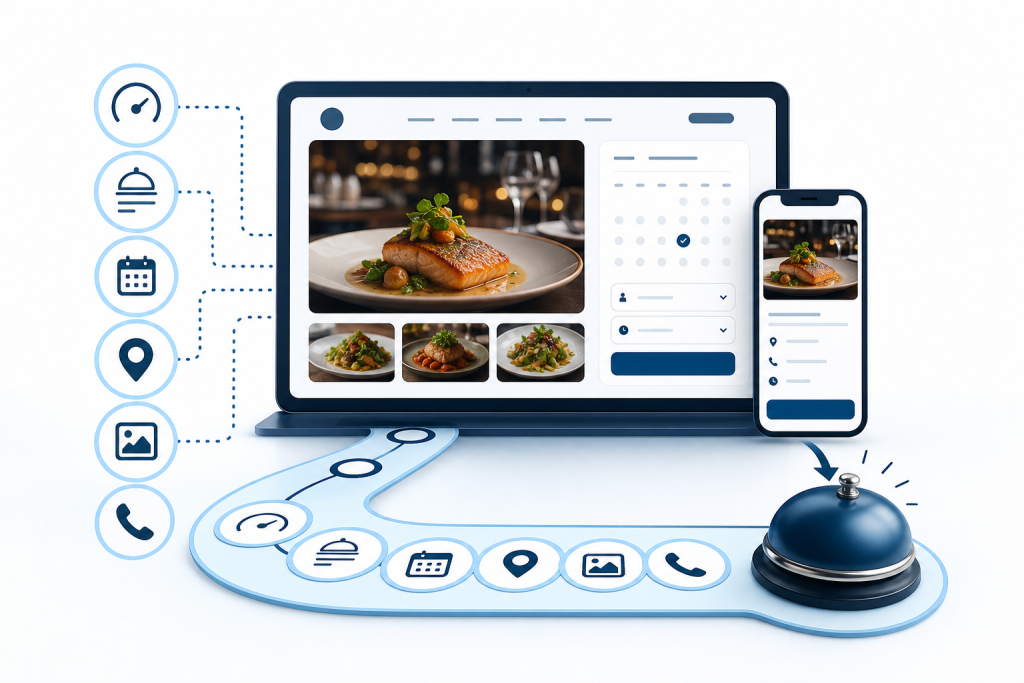
Most restaurant websites aren't bad because they look ugly. They fail because they're built like brochures when they need to work like a front-of-house host. A brochure sits there. A good restaurant site actively moves a hungry visitor toward a decision.
The gap usually shows up in three places: slow load times on mobile, missing or hard-to-find information, and no clear path to take action. Fix those three things and you've already outperformed most local restaurant sites.
Mobile Speed Is Non-Negotiable
More than half of restaurant searches happen on a phone, often while someone is already out and deciding where to go. If your site takes more than three seconds to load on mobile, a significant portion of those visitors will leave before they see a single photo of your food.
Page speed isn't just a user experience issue — it affects where you rank in search results. A slow site can suppress your visibility before anyone even gets the chance to click.
The practical fixes are image compression, a fast and reliable hosting environment, and clean code that isn't weighed down by unnecessary scripts. If your current site scores poorly on mobile speed tests, that's the first thing to address, not the last.
The Menu Has to Be Easy to Find and Easy to Read
This sounds obvious, but it's where many restaurant sites quietly lose customers. A PDF that doesn't render well on mobile, a menu buried three clicks deep, or a page that hasn't been updated since last year all create friction at exactly the wrong moment.
Your menu should be:
- Accessible from the homepage in one tap or click
- Formatted as actual text, not a scanned image or PDF
- Organized clearly by category with prices visible
- Current — reflecting what you're actually serving
Text-based menus also help with search visibility. Search engines can read the words on your page. They can't read a scanned PDF. If your most popular dish is a Dungeness crab bisque, that phrase should appear on your site as readable text, not locked inside an image file.
Reservation Functionality That Actually Works
If you take reservations, the path to booking one should be immediate. A phone number alone isn't enough. Many diners — especially those searching from a phone at 9 PM — won't call. They'll book online or they'll move on.
Whether you use a third-party booking system or a simple contact form, the option to reserve should appear prominently on the homepage and on any page where someone might be making a decision. Don't make people hunt for it.
If you don't take reservations, say so clearly and give visitors the next best thing: your hours, your address with a tap-to-navigate link, and a phone number for questions.
Local SEO Signals Built Into the Site
A restaurant site that doesn't tell search engines where it is will struggle to appear in local results, regardless of how good the food is. Local SEO for restaurants starts with a few foundational elements.
Your Name, Address, and Phone Number
NAP information should be consistent across your website, your Google Business Profile, and any directory listings. Put it in the footer of every page — not just the contact page. Inconsistent information across platforms confuses search engines and erodes your local ranking.
Location-Specific Page Content
Your homepage and about page should naturally mention your city and neighborhood. Phrases like "Italian restaurant in Coos Bay" or "waterfront dining in downtown Coos Bay" help your site appear when people nearby are searching. This isn't about stuffing keywords — it's about writing the way a real local business would describe itself.
Schema Markup
Structured data tells search engines exactly what your business is, where it's located, what your hours are, and what type of cuisine you serve. Most restaurant sites skip this entirely. Adding Restaurant schema to your homepage is a relatively small technical step that can meaningfully improve how your listing appears in search results.
Photos That Do the Selling
Food photography is one of the highest-return investments a restaurant can make in its website. Blurry, poorly lit, or stock photos undermine the impression your site makes even when everything else is right.
Real photos of your actual dishes, your dining room, and your team build trust in a way that words can't match. For restaurants in coastal or scenic areas, exterior and atmosphere shots can be particularly effective at conveying the experience before a customer ever walks in.
Professional photography and video — including drone filming for businesses where location and setting are part of the appeal — are part of the web design work Epuerto handles for local businesses in Coos County.
Hours, Location, and Contact Information Front and Center
This seems basic. It's still wrong on a surprising number of restaurant sites. Your hours and address should be visible without scrolling on the homepage. If you have multiple locations, each one needs its own clearly labeled page.
A tap-to-call phone number and a tap-to-navigate address link are standard expectations on mobile. If a visitor has to copy and paste your address into a maps app, you've already added unnecessary friction.
An About Page That Builds Connection
People choose restaurants partly on food and partly on feeling. A short, genuine about page — one that tells the story of who runs the place and why they opened it — creates a connection that a menu alone can't.
It doesn't need to be long. Two or three paragraphs about the owners, the inspiration behind the restaurant, and what makes it different from the place down the street is enough. Authentic beats polished here every time.
What to Avoid
A few things that show up regularly on restaurant sites and consistently hurt performance:
- Auto-playing music or video on page load. It startles visitors and slows the page.
- Flash or outdated animation that doesn't work on modern browsers or mobile devices.
- Cluttered homepages that try to show everything at once. Lead with the most important action: view the menu or make a reservation.
- No SSL certificate. A site flagged as "not secure" signals neglect and affects search rankings.
- Outdated content. A holiday menu from two years ago or a renovation notice that was never taken down tells visitors the site isn't being maintained.
Putting It Together: What a Strong Restaurant Site Looks Like
The best restaurant websites share a clear structure. A homepage that loads fast on mobile, leads with an appetizing photo, and puts the menu and reservation option within immediate reach. A menu page with readable text, organized categories, and current pricing. An about page with a real story. A contact page with hours, address, and phone. Local SEO signals woven throughout.
That's not a long list. The challenge for most restaurant owners isn't knowing what's needed — it's having the time and technical capacity to build and maintain it while running a kitchen.
If you're a restaurant owner in Coos County looking for web design that handles all of this without pulling you away from your actual business, Epuerto builds and maintains custom WordPress sites for local businesses, with photography, hosting, and ongoing content management included in the service.
Frequently Asked Questions
What pages does a restaurant website need?
At minimum: a homepage, a menu page, an about page, a contact page with hours and location, and a reservations or booking page if you take reservations. Each should be reachable in one or two taps from the homepage.
How important is mobile optimization for a restaurant website?
Very important. Most restaurant searches happen on mobile, often from people who are already out and deciding where to eat. A site that loads slowly or is hard to navigate on a phone will lose those visitors to a competitor.
Should a restaurant menu be a PDF or a web page?
A web page is better. Search engines can read text on a web page, which helps with local search visibility. PDFs often don't display well on mobile and can't be indexed the same way. If you want to offer a downloadable version, keep a text-based page as the primary menu.
What is schema markup and does a restaurant website need it?
Schema markup is structured data added to your site's code that tells search engines specific details about your business — location, hours, cuisine type, price range. It's not required, but it can improve how your listing appears in search results and is worth adding to any restaurant site.
How often should a restaurant website be updated?
At minimum, whenever your menu, hours, or contact information changes. Regular updates — seasonal menu additions, event announcements — also signal to search engines that the site is active, which can support rankings over time.
Does a restaurant website need professional photography?
Not strictly required, but high-quality photos of your food and space make a significant difference in how visitors perceive your restaurant before they visit. Poor or stock photos undermine trust even when everything else on the site is well-built.
How does a restaurant website help with local search rankings?
Through a combination of factors: fast load speed, consistent NAP information, location-specific content, schema markup, and a well-maintained Google Business Profile that links back to the site. Each element reinforces the others.
A restaurant website that earns reservations isn't complicated. It's fast, clear, and built around what a hungry person needs to know in the next thirty seconds. Get those fundamentals right and your site becomes one of the most consistent front-of-house staff you have.