
A single missed security alert at 2:00 a.m. can turn into downtime, lost files, a compliance issue, or a week of cleanup your team did not budget for. That is why many organizations ask, what does managed firewall do, and is it worth handing this part of security to a service provider instead of managing it internally?
The short answer is that a managed firewall service helps protect your network by monitoring traffic, blocking suspicious activity, applying security policies, updating rules, and responding to threats on an ongoing basis. But the real value is not just in blocking bad traffic. It is in giving your business consistent protection without requiring your office manager, executive director, or internal IT generalist to act like a full-time security analyst.
What does managed firewall do in practical terms?
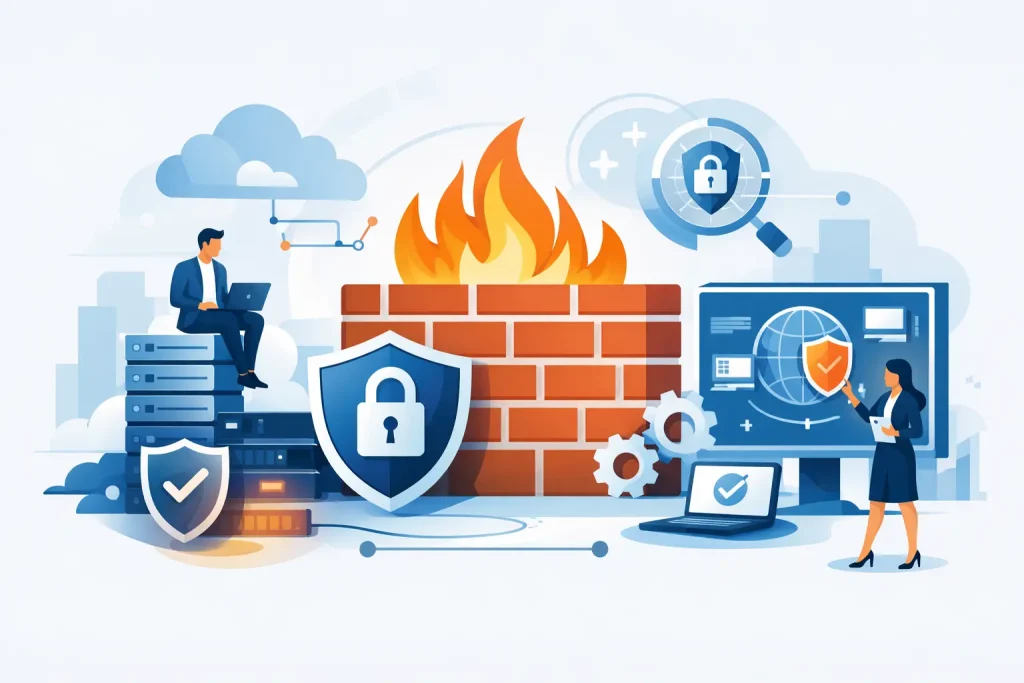
A managed firewall sits between your business network and the outside world, inspecting traffic that comes in and goes out. Its job is to allow legitimate activity and stop traffic that violates your security policy. When that firewall is managed as a service, a provider handles the setup, monitoring, maintenance, rule changes, and response work that often gets neglected in busy organizations.
That matters because a firewall is not a device you install once and forget. Threats change. Staff roles change. Cloud apps get added. Vendors need access. Remote employees connect from different locations. A firewall that was configured properly two years ago may now have outdated rules, unused openings, or visibility gaps.
A managed service addresses that drift. It keeps the firewall aligned with how your business actually operates, not just how it operated when the equipment was first installed.
The core jobs a managed firewall service handles
At the most basic level, managed firewall service includes policy management. That means deciding what traffic should be allowed, restricted, or blocked based on your users, systems, and business needs. A medical office, nonprofit, retail location, and municipal partner will not all need the same access rules.
It also includes continuous monitoring. Firewalls generate logs and alerts constantly, but raw alerts by themselves do not protect anything. Someone has to review them, spot patterns, and determine whether unusual traffic is harmless, misconfigured, or actively malicious.
Then there is maintenance. Firmware updates, patching, rule cleanup, backup of configurations, and performance checks all matter. If these tasks are skipped, even a high-quality firewall can become a weak point instead of a protective layer.
A managed provider may also support incident response. If suspicious traffic appears, a service team can investigate, adjust rules, isolate risky connections, and reduce the chance that a small event turns into a larger breach.
Why businesses struggle to manage firewalls on their own
Many small and mid-sized organizations assume their firewall is already “handled” because internet service is working and no one is complaining. That is a risky assumption.
In reality, firewall management often gets pushed to the side because internal teams are focused on immediate operational issues. They are fixing printers, supporting users, replacing laptops, updating software, and keeping everyday work moving. Security monitoring becomes reactive instead of proactive.
There is also a skills gap. Firewall tools can be powerful, but they are not always simple. One wrong rule can block important business systems. One overly permissive setting can expose remote access, file shares, or internal services to unnecessary risk. Good firewall management requires both technical knowledge and context about how the organization functions.
For growing businesses and community organizations, that is where managed service becomes practical. It fills a gap between having no strategy and trying to build an in-house security operation that may be too expensive for the size of the organization.
What a managed firewall protects against
A managed firewall does not stop every cyber threat by itself, and any provider who suggests otherwise is overselling it. Security works best in layers. Still, the firewall plays a major role in reducing exposure.
It can help block unauthorized connection attempts, suspicious inbound traffic, risky outbound connections, and access to known malicious destinations. It can enforce segmentation between different parts of your network so that guest Wi-Fi, office systems, phones, cameras, and servers are not all mixed together.
That segmentation is often overlooked, but it is especially valuable. If one part of the network is compromised, segmentation can make it harder for the problem to spread. For a business handling customer data, payment systems, or sensitive internal files, that can make a meaningful difference.
Managed firewall service can also support safer remote access. As more organizations rely on cloud tools and hybrid work, the network edge is no longer limited to one office. Firewall policy has to account for employees logging in from home, mobile devices connecting off-site, and vendors accessing systems for support.
What does managed firewall do beyond blocking traffic?
This is where the service becomes more strategic. Good firewall management is not only about saying no. It is also about enabling the right kind of access safely.
For example, your team may need secure connections to cloud applications, hosted email, VoIP systems, line-of-business software, or a public-facing website. A managed provider helps make sure those services work reliably while reducing unnecessary exposure.
That balance matters for organizations that depend on both operational continuity and public visibility. If your website, online forms, internal systems, and communication tools all support customer engagement, a firewall has to protect them without creating avoidable disruptions.
Managed firewall service can also improve documentation and accountability. Instead of relying on tribal knowledge like “the old IT guy opened that port for something,” you have a clearer record of why rules exist, who approved them, and when they should be reviewed.
When managed firewall service makes the most sense
Not every organization needs the same level of firewall management. A very small office with minimal internet exposure may have simpler needs than a multi-site business, healthcare provider, museum, or nonprofit running public events, online donations, remote staff access, and multiple third-party platforms.
The more systems you depend on, the more valuable ongoing oversight becomes. That is especially true if downtime would hurt customer service, fundraising, appointments, scheduling, or public trust.
Managed service also makes sense when compliance is part of the picture. If your organization handles health information, payment data, confidential donor records, or other protected information, firewall controls are part of a broader risk management strategy. The firewall will not handle compliance alone, but unmanaged security tools make compliance harder, not easier.
If your organization does not have in-house cybersecurity expertise, managed firewall support is often the most realistic way to get consistent protection without adding full-time security staffing.
The trade-offs to understand
Managed firewall service is valuable, but it is not magic and it is not one-size-fits-all. Cost is one factor. Paying a provider monthly may feel like more than handling it internally, especially if you only compare it to the cost of the hardware. But that comparison is incomplete. The real comparison is between managed support and the time, expertise, risk, and interruption costs of doing it inconsistently.
There is also the question of responsiveness and fit. Some providers treat firewall management like a commodity service, with little understanding of your actual operations. That can lead to slow changes, generic policies, or support teams that do not understand why a blocked application matters to your staff.
That is why local context and business alignment matter. A provider should understand not just traffic patterns, but how your organization works, what systems are essential, and what kind of interruption would affect your customers or community.
How to evaluate a managed firewall provider
The best question is not just “Do they manage firewalls?” but “How do they manage them?” Ask whether they provide active monitoring, policy review, firmware updates, alert triage, reporting, and support for rule changes. Ask how incidents are escalated and who is accountable for response.
You should also ask how they coordinate firewall protection with the rest of your environment. Firewall management works better when it fits into broader IT planning, network oversight, backup strategy, endpoint security, and business continuity. A disconnected approach leaves gaps.
For businesses that want one partner to handle both technical infrastructure and the systems that support visibility and growth, that coordination becomes even more useful. Epuerto works with organizations that need comprehensive digital solutions, and that kind of integrated support can reduce the handoff problems that appear when security, operations, and online presence are managed in separate silos.
What does managed firewall do for long-term business health?
It helps create a more stable operating environment. That may sound less exciting than “stops hackers,” but for many organizations, stability is the real win. Your team can work, your systems stay available, and security decisions are reviewed by people whose job is to pay attention before there is an emergency.
It also supports growth. As your organization adds users, locations, devices, cloud platforms, and digital services, unmanaged security becomes harder to maintain. Managed firewall service gives you a stronger foundation for change, which is exactly what growing businesses and community institutions need.
If you are asking what does managed firewall do, the best answer is this: it turns a critical security tool into an actively maintained service that protects your network, supports your operations, and reduces the chances that preventable issues become expensive ones. For most organizations, that is not just a technical upgrade. It is a smarter way to protect the work you have built.