
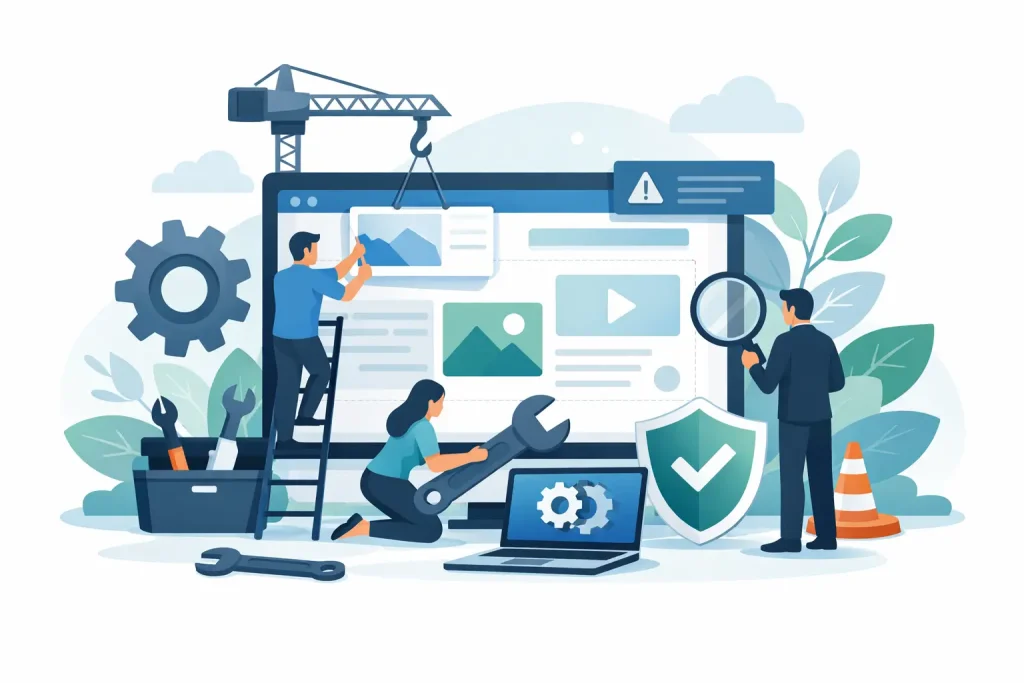
A website rarely fails all at once. More often, it slips. A staff page goes out of date. A contact form stops sending. A plugin warning gets ignored for weeks. Then one day, the site is slow, key information is wrong, and your organization is losing trust without realizing it. That is why website maintenance for organizations is not a side task. It is part of daily operations, public credibility, and long-term growth.
For businesses, nonprofits, healthcare practices, museums, chambers, and community institutions, a website is more than a digital brochure. It is often the first place people confirm your legitimacy, find your hours, review your services, make decisions, or reach out for help. If it is neglected, the damage is not just technical. It affects reputation, visibility, and revenue.
Why website maintenance for organizations matters
Organizations tend to outgrow the website they launched. New services are added. Staff changes. Events come and go. Search behavior shifts. Security threats evolve. The website that worked 18 months ago may still be online, but that does not mean it is still doing its job.
Maintenance keeps your site aligned with reality. It protects the technical foundation with software updates, security checks, backups, and performance monitoring. It also protects the public-facing side with accurate content, fresh visuals, and working conversion paths. Those two sides belong together. A secure website that has outdated information still creates friction. A visually polished site with poor patching is still a liability.
This is where many organizations run into trouble. Website work gets split between departments, volunteers, or overextended staff. IT handles one piece, marketing handles another, and nobody owns the whole picture. The result is inconsistency. Pages get missed, forms break, and priorities compete. A maintenance plan works best when it treats the website as both infrastructure and communication channel.
What good website maintenance includes
The term maintenance sounds simple, but the work is layered. At the technical level, it means core updates, plugin or module updates, server checks, SSL monitoring, uptime review, malware scanning, backups, and restore testing. These items reduce the chance of outages, security incidents, and compatibility problems.
At the content level, maintenance means reviewing high-traffic pages, removing expired notices, checking staff and board listings, updating service descriptions, confirming location and contact details, and testing forms and calls to action. For many organizations, this is where the biggest gains happen. A website does not need a full redesign to perform better. Sometimes it needs current messaging, better page speed, and fewer dead ends.
There is also a strategic layer that gets overlooked. Search rankings can drop when pages become stale, internal links break, or mobile usability slips. User trust falls when branding is inconsistent or information feels neglected. Maintenance should include periodic review of analytics, search visibility, and user behavior so you can adjust before small issues become ongoing losses.
The risks of treating maintenance as an afterthought
Some organizations wait until something breaks because regular maintenance feels less urgent than daily operations. That approach can look cheaper in the short term, but it usually costs more over time.
A missed security update can create downtime, data exposure, or cleanup expenses. An outdated event calendar can frustrate visitors and create unnecessary calls to staff. A broken donation form or appointment request form can quietly reduce conversions for weeks. Even something as simple as a slow-loading homepage can push potential customers or community members to move on.
There is also an internal cost. When the website is unreliable, staff start creating workarounds. They answer questions the site should answer. They resend links. They manually process requests that should have come through a form. Maintenance is not just about fixing a website. It is about reducing drag across the organization.
Who should own website maintenance
The honest answer is that it depends on your size, complexity, and internal capacity. A small organization with a simple site may manage some tasks internally if there is a clear owner and a documented process. A larger business or institution with forms, integrations, user accounts, compliance concerns, or frequent content changes usually needs more structured support.
What matters most is accountability. Someone should know what gets updated weekly, monthly, and quarterly. Someone should know where backups live, how forms are tested, what software is installed, and who is alerted if the site goes down. Without clear ownership, maintenance turns into a vague responsibility shared by everyone and handled by no one.
For many organizations, outsourcing makes sense because website maintenance crosses too many disciplines. It touches hosting, security, content, design, user experience, analytics, and sometimes local marketing. Working with one experienced partner can simplify that process and reduce the handoff problems that come with juggling separate vendors.
A practical maintenance rhythm that works
The best maintenance schedules are realistic. If a plan is too complex for your team to sustain, it will fail. A strong rhythm usually starts with weekly checks for uptime, backups, software updates, and form testing. Monthly review should include performance, security logs, content accuracy, and key pages that support inquiries, sales, donations, or appointments.
Quarterly, organizations should step back and look at the bigger picture. Are your most important pages current? Are traffic patterns changing? Are you showing the right services and priorities? Is the site still aligned with your brand and your community audience? This is also a good time to review accessibility, mobile experience, and search visibility.
Annually, it helps to evaluate whether the site architecture still supports your goals. Not every organization needs a redesign every few years, but every organization does need an honest review. Sometimes the right answer is continued maintenance. Sometimes the better answer is rebuilding around new needs.
Website maintenance and local visibility
For community-based organizations, maintenance has a direct impact on local reach. Search engines favor sites that are fast, secure, and current. Visitors are more likely to act when business information is accurate and pages reflect current services, events, and community involvement.
This matters even more for regional organizations that depend on trust and repeat engagement. A local customer checking your hours, a donor reviewing your mission, or a family looking for services may make a decision in under a minute. If your website feels outdated, confidence drops fast.
That is why maintenance should connect to your wider digital presence. Your website, local listings, social content, email campaigns, and community promotions should support one another. When they do, you create a stronger and more consistent public presence. When they do not, visibility becomes fragmented and harder to measure.
Choosing the right support model
Not every organization needs the same level of maintenance. A brochure-style site with a few static pages has different needs than a healthcare site, a membership portal, or a nonprofit with event registration and donations. The right model depends on how important the site is to day-to-day operations.
If your website generates leads, supports customer service, collects payments, shares time-sensitive information, or represents your organization to the public every day, maintenance should be proactive rather than reactive. Waiting for a problem report is not a strategy.
A good support partner will not just update plugins and send a receipt. They should help you prioritize what affects business performance, security, and public trust. That means looking at the whole environment, not just the code. For organizations that want one partner to manage technology and communications together, that integrated approach can produce real, measurable outcomes. It is one reason companies like Epuerto are built around comprehensive digital solutions instead of isolated services.
Website maintenance is not glamorous, and that is exactly the point. It is the ongoing work that keeps your organization credible, reachable, and ready to grow. When your site is maintained well, people do not notice the maintenance. They notice that everything works, the information is current, and your organization feels dependable from the first click.