
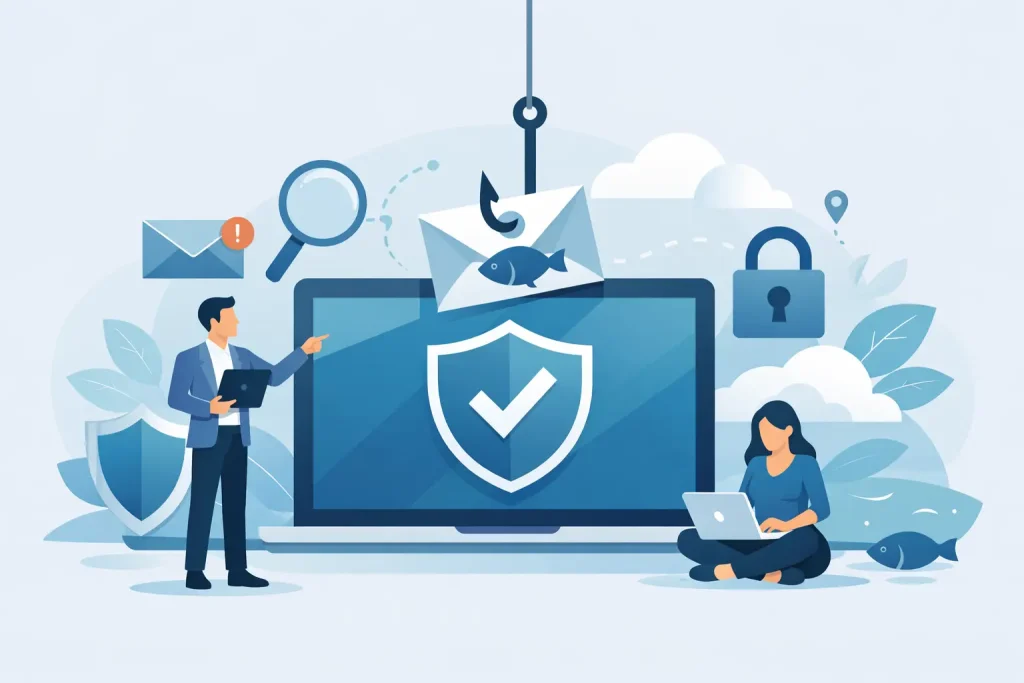
One bad click can sideline payroll, expose donor records, freeze scheduling systems, or hand over customer data to a criminal pretending to be a familiar contact. That is why a practical guide to phishing prevention training matters for small and mid-sized organizations. Phishing is no longer just a big-company problem. Local businesses, nonprofits, healthcare offices, and community institutions are frequent targets because attackers know many teams are busy, understaffed, and juggling too many systems at once.
Phishing prevention training works best when it is treated as an operational priority, not a once-a-year compliance task. Most employees are not careless. They are moving quickly, answering messages between meetings, approving invoices, or coordinating with vendors and volunteers. Attackers design emails, texts, and login pages to exploit that pace. Training has to reflect real working conditions if you want real, measurable outcomes.
What phishing prevention training should actually do
A strong training program is not about making employees suspicious of every message they receive. It is about helping them slow down at the right moment and recognize the patterns that matter. Good training teaches people how to evaluate a request, confirm unusual activity, and report a problem early enough to contain it.
That means the goal is behavior change, not just awareness. If an employee can recite the definition of phishing but still approves a fake payment request, the training did not do its job. On the other hand, if a staff member pauses, notices a mismatched domain, and reports the message before anyone else engages, that is success.
For many organizations, the biggest shift is cultural. Staff should feel supported when they report something suspicious, even if it turns out to be harmless. If people think they will be blamed for asking questions, they stay quiet. Silence is expensive.
A guide to phishing prevention training for real workplaces
The most effective phishing prevention programs start with your actual risk profile. A healthcare practice faces different threats than a retail shop or a chamber of commerce. A finance manager who handles wire transfers needs a different level of training than a seasonal front-desk employee. The basic principles stay the same, but the examples, policies, and testing should match the work people really do.
Start by identifying where phishing could hurt your organization most. Email is the obvious entry point, but it is not the only one. Attackers also use text messages, fake file-sharing notices, bogus password reset prompts, social media impersonation, and voice calls that create pressure. If your training covers only email, it may miss the scams your staff sees every week.
Next, decide what employees must be able to do after training. They should know how to inspect sender details, spot urgent or unusual requests, avoid entering passwords on unfamiliar pages, and use an internal reporting process. They should also understand when to verify requests by phone or in person, especially for payments, account changes, or sensitive records.
This is where many businesses overcomplicate things. Staff do not need a lecture on every cybersecurity term. They need clear rules they can remember under pressure.
The signs employees need to recognize
Most phishing messages rely on a few predictable tactics. They create urgency, mimic trusted brands, or appear to come from someone with authority. A fake invoice from a vendor, a password expiration notice, a shipping problem, or a message from an executive asking for immediate help are all common examples.
Teach employees to look for context, not just spelling mistakes. Poor grammar still shows up, but many phishing emails are polished. A better warning sign is a request that feels slightly off. Maybe the sender usually calls instead of emailing. Maybe the billing change is sudden. Maybe the login page looks familiar, but the web address is not. Those small inconsistencies are often the real clue.
It also helps to explain that phishing is emotional engineering. Attackers want people to feel rushed, worried, helpful, or flattered. Once employees understand that manipulation is part of the tactic, they are better prepared to interrupt it.
How to structure training without overwhelming staff
Short, recurring sessions usually outperform long annual presentations. People retain more when training is tied to everyday scenarios and revisited throughout the year. A 15-minute session on invoice fraud, followed by a simple simulated test later that month, is often more effective than a single 90-minute seminar nobody remembers.
Different departments may also need tailored examples. Leadership teams should be trained on impersonation and payment fraud because attackers often target executives and finance staff directly. Customer-facing teams need to understand account reset scams and spoofed communications. Organizations with remote or hybrid staff should cover collaboration tools, mobile threats, and multi-factor authentication prompts.
There is a trade-off here. Highly customized training is more relevant, but it takes more planning. More general training is easier to deliver, but employees may tune it out if it feels disconnected from their roles. The right balance depends on your size, industry, and internal capacity.
Why simulated phishing matters
Simulated phishing tests are valuable because they move training from theory into practice. They show how employees respond in real time and reveal where your organization is vulnerable. If staff repeatedly click on fake file-sharing notices, for example, that points to a training gap you can address quickly.
The key is to use simulations as a coaching tool, not a gotcha exercise. If employees feel tricked or embarrassed, trust erodes. If they receive immediate, useful feedback, performance improves. The point is not to catch people failing. It is to help them build better instincts.
Over time, these tests also give leadership something many organizations lack: visibility. You can track trends, see which departments need support, and measure whether your training is changing behavior. That is a far better indicator than checking a box on an attendance sheet.
Policies and technology still matter
Training works best when it is backed by clear procedures and the right technical controls. Employees should know exactly how to report suspicious messages and what happens next. If reporting is confusing or time-consuming, people will skip it.
Technology should also reduce the burden on staff. Email filtering, multi-factor authentication, endpoint protection, DNS security, and access controls all strengthen your defenses. Training alone cannot stop phishing, just as software alone cannot stop every risky decision. Businesses get better protection when people, process, and technology support each other.
This is especially important for organizations with limited in-house IT capacity. Small teams often need a practical system that is easy to maintain, not a patchwork of tools nobody fully manages. That is where a comprehensive digital solutions partner can help align security training with the broader IT environment, so prevention is not operating in isolation.
Common mistakes that weaken phishing training
One common mistake is treating training as punishment after an incident. That approach creates anxiety and usually leads to minimal compliance, not long-term improvement. Another is assuming senior staff need less guidance. In reality, leaders are frequent targets because they authorize payments, access sensitive data, and carry organizational authority.
Businesses also run into trouble when they make training too technical. Most employees do not need deep cybersecurity knowledge. They need practical judgment, a simple reporting path, and repeated exposure to realistic examples. If the material feels abstract, it will not change daily habits.
Another weak point is inconsistency. A single training session without reinforcement fades fast. New threats appear constantly, and staff turnover means knowledge disappears unless it is built into onboarding and regular operations.
Building a stronger security culture over time
The best guide to phishing prevention training is one that fits your organization’s size, pace, and responsibilities. A small nonprofit may need lightweight but frequent education and clear escalation steps. A growing medical office may need stronger role-based training, more technical controls, and tighter account security. A business with multiple locations may need standardized procedures so every team handles suspicious messages the same way.
Whatever the setting, the strongest programs share the same mindset: security is part of daily business, not a separate project. When staff know what to watch for, feel comfortable reporting concerns, and see that leadership takes the issue seriously, risk drops.
For community-based organizations, that matters beyond your own network. Trust is part of your reputation. Customers, patients, members, and partners expect you to protect their information and operate reliably. Effective phishing prevention training supports both.
A better security posture does not come from fear. It comes from clarity, repetition, and systems that help people make the right call when a suspicious message lands in the inbox. Start there, keep it practical, and your team will be far better prepared for the threats that show up in ordinary workdays.