
- Why Website Redesign Cost Varies So Widely
- The Factors That Push Redesign Costs Higher
- The Factors That Bring Redesign Costs Down
- What You Should Ask Before Signing Anything
- The Hidden Cost of Getting It Wrong
- Where Epuerto Fits Into This Picture
- How to Budget for a Website Redesign
- Frequently Asked Questions
Website redesign costs can range from a few hundred dollars to well over $50,000, and that gap isn't random. The factors that push a project toward the high end—or pull it back down—are specific, predictable, and worth understanding before you talk to any agency or developer. This article walks through each one so you can enter that conversation knowing what you actually need and what you should reasonably expect to pay.
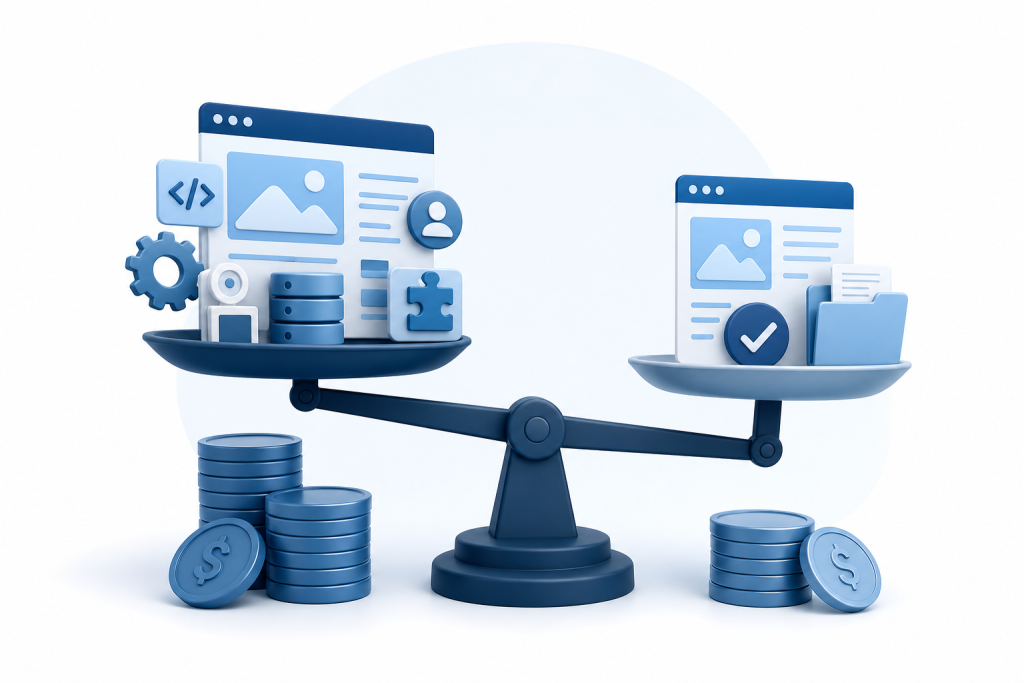
Why Website Redesign Cost Varies So Widely
The short answer is scope. Two businesses can both call what they want a "redesign" and mean completely different things. One owner wants a fresh look on five pages. Another needs a full rebuild with e-commerce, a new content management system, custom integrations, and SEO migration for 200 existing URLs.
Agencies price the work in front of them, not the label you put on it. Understanding what goes into that scope is the first step toward getting an accurate quote—and avoiding sticker shock.
The Factors That Push Redesign Costs Higher
Size and Complexity of the Site
Page count is the most direct cost driver. A 5-page brochure site takes far less time to design, build, and test than a 50-page site with service area pages, a blog archive, staff profiles, and a resource library. Every page needs a layout, content, mobile testing, and a quality review.
Custom functionality adds another layer. If your site needs appointment booking, a client portal, membership access, product filtering, or a custom database, a developer has to build and test that logic from scratch. Templates don't cover it.
Your Current Site’s Technical State
If your existing site runs on an outdated platform, has broken code, or was never built with clean structure, migration and cleanup take real time. A site cobbled together on a page builder five years ago often requires more remediation work than starting fresh.
Mixed HTTP and HTTPS resource calls, duplicate heading tags, missing structured data, and bloated plugin stacks are all forms of technical debt that have to be resolved during a redesign—not after. Agencies that do thorough work will audit your current site before scoping the project, and that audit will show up in the price.
Custom Design vs. Templates
A theme-based design built on an existing template framework costs less than a fully custom build from scratch. That's not a quality judgment. For many small businesses, a well-configured premium theme delivers everything they need. But if your brand requires a unique visual identity, specific layout behavior, or design elements no template provides out of the box, custom work takes more hours.
The difference between these two paths can be significant. Know which one you actually need before you request a quote.
Content Creation and Migration
This is the factor most business owners underestimate. A redesign isn't just a new look—if your content is outdated, thin, or poorly written, the new design will still underperform. Many agencies offer copywriting as part of a redesign package, but that work takes time and costs money.
Content migration matters too. Moving 80 pages of text, images, and metadata from an old site to a new one while preserving URL structure and correctly redirecting old paths is a real technical task. If SEO matters to your business, this step can't be skipped or rushed.
SEO and Technical Optimization
A redesign that ignores SEO can wipe out years of search ranking progress in a single launch. Doing it right means redirect mapping for changed URLs, updated title tags and meta descriptions, structured data implementation, page speed optimization, and mobile performance testing.
For any business that depends on organic search traffic, these aren't optional extras—they're part of the project. Agencies that include them charge accordingly. Agencies that skip them leave you with a beautiful site that no one finds.
Integrations and Third-Party Tools
Does your site need to connect to a CRM, an email marketing platform, a booking system, a payment processor, or a point-of-sale system? Each integration requires configuration and testing. Some are straightforward. Others require custom API work. The more external tools your business relies on, the higher the integration cost.
Ongoing Maintenance After Launch
Some agencies quote a one-time project fee. Others build hosting, maintenance, and support into a monthly retainer. Neither model is inherently better, but you need to know which one you're buying.
A site that goes live and is never touched again will drift. Plugins go outdated. WordPress core updates break things. Security vulnerabilities appear. Performance degrades. If the agency's quote doesn't include post-launch support, budget for it separately—or at least ask what it looks like.
The Factors That Bring Redesign Costs Down
Clear Scope and Prepared Assets
Projects run over budget when scope is vague or assets are missing. If you come to a redesign with a defined page list, approved copy, quality images, and clear brand guidelines, the agency spends less time waiting and revising. That saves hours, and hours are what you're paying for.
Fewer Custom Features
Every custom feature is a development sprint. If you can accomplish your goals with existing plugins, integrations, or platform features rather than custom-built functionality, your cost drops. Be honest about what your business actually needs versus what would simply be nice to have.
A Phased Approach
Not everything has to happen at once. A phased redesign launches the core site first and adds features over time. This spreads cost across months, lets you validate what works before investing further, and keeps the initial project manageable.
Working With a Local Agency
National agencies and large studios carry overhead that shows up in their rates. A local agency with lower operating costs, direct communication, and genuine familiarity with your market often delivers comparable—or better—results for small and mid-sized businesses at a more accessible price point.
That local accountability matters beyond cost. When something goes wrong after launch, you want someone you can actually reach.
What You Should Ask Before Signing Anything
Before committing to a redesign project, get clear answers to these questions:
- What is included in the quote? Design, development, content, SEO setup, testing, and launch support aren't always bundled together.
- What does the revision process look like? Unlimited revisions sounds appealing until the timeline never ends. Ask how revisions are scoped.
- Who owns the site after launch? Some agencies retain ownership of the code or lock you into their proprietary platform. You should own your site.
- What happens to my existing SEO? Ask specifically about redirect mapping and whether the agency will audit your current keyword rankings before migrating.
- What does ongoing support look like? Get a clear picture of what happens after launch—including who to call when something breaks.
The Hidden Cost of Getting It Wrong
A poorly executed redesign costs more than the project itself. A site that launches with broken redirects loses organic traffic that took years to build. A site with slow load times loses visitors before they read a single word. A site built on a platform you can't manage yourself creates ongoing dependency on the agency for every small change.
The cheapest quote is rarely the cheapest outcome. What you want is a quote that reflects the actual scope of work and comes from a team that will still be accountable after the invoice is paid.
Where Epuerto Fits Into This Picture
For small businesses in Coos Bay and Coos County, Oregon, the redesign conversation often comes up alongside a broader set of questions: who's managing the site after launch, who's handling IT security, and who's helping the business get found locally.
Epuerto handles all three under one retainer. Web design and development, managed IT and cybersecurity, and multi-channel local marketing run together rather than being split across separate vendors. That structure removes the coordination overhead that comes with managing multiple agencies and ensures the people who built your site are also the ones monitoring your network and running your local marketing.
That's a different model from what most national agencies offer. Platforms like WebFX and Thrive are strong at digital marketing but have no IT or cybersecurity services. Hibu offers multi-channel marketing but no managed IT, and its published customer satisfaction rating of 2.8 out of 5 reflects documented service issues. None of these national providers have a physical presence in Coos County or the community relationships that come with it.
If your redesign is part of a larger conversation about how your business operates online and how your infrastructure is protected, it's worth talking to a team that can address all of it at once.
How to Budget for a Website Redesign
No honest agency can give you a number in an article without knowing your specific scope. What you can do is prepare a clear brief before your first conversation. Include:
- How many pages your current site has and how many the new site needs
- Any custom features or integrations you require
- Whether you need content written or just migrated
- Your timeline
- Whether you want ongoing maintenance included or will handle it separately
That brief will make your first conversation far more productive and help you compare quotes accurately when they come in.
Frequently Asked Questions
What is the average website redesign cost for a small business?
It depends heavily on scope. A small business site with five to fifteen pages, no custom functionality, and template-based design typically falls in a lower range than a larger site with custom features, e-commerce, or complex integrations. The most useful thing you can do is define your scope clearly before requesting quotes—agencies price the work in front of them, not a generic category.
Does a website redesign affect my Google rankings?
It can, in either direction. A redesign that includes proper redirect mapping, updated title tags, structured data, and improved page speed can strengthen your rankings. One that changes URLs without redirects, removes content, or slows down the site can cause significant drops. SEO should be part of the redesign process, not an afterthought.
How long does a website redesign take?
A straightforward small business site redesign typically takes four to eight weeks from kickoff to launch. Larger sites with custom development, content creation, and complex integrations can take three to six months. Timeline is directly tied to scope, how quickly you provide assets and feedback, and how many revision rounds are needed.
Should I redesign my site myself or hire an agency?
DIY tools can work for very simple sites with minimal requirements. But if your site needs to perform well in search, integrate with business tools, handle security correctly, and represent your brand professionally, a professional build is worth the investment. The ongoing maintenance question matters too—a site you can't manage yourself creates long-term dependency.
What is the difference between a website refresh and a full redesign?
A refresh typically means updating visual elements—colors, fonts, imagery—without changing the underlying structure or platform. A full redesign involves rebuilding the site, often on a new or updated platform, with a new information architecture, new design, and often new content. Refreshes cost less but address fewer problems. If your site has structural issues, outdated code, or poor performance, a refresh won't fix them.
How do I know if my website actually needs a redesign?
Common signals include slow load times, poor mobile performance, a design that no longer reflects your brand, difficulty making updates, low conversion rates, or a platform you've outgrown. A technical audit will surface most of these issues objectively.
Can I redesign my site in phases to manage cost?
Yes. A phased approach launches the core site first and adds features over time. It's a practical option for businesses that need a better site now but want to spread the investment. The key is planning the phases before launch so the architecture supports future additions without requiring another full rebuild.
Website redesign cost isn't a fixed number. It's the sum of the decisions you make about scope, quality, and who you trust to do the work. Understand those decisions before you sign anything, and you'll end up with a site that earns back what you spent on it.